Extreme wealth concentration — as strong as ever

by Ingrid Robeyns on April 9, 2026

A journalist from the Wall Street Journal wrote to me a week ago to ask what the numbers that I use in the opening pages of my book Limitarianism would look like today. In particular, she asked whether I could calculate for her the “lifetime equivalent hourly income” of Elon Musk’s current assets today.

Short answer: today that number is 5 million dollars per hour.
[click to continue…]

{ 0 comments }

Older but not sicker

by John Q on April 7, 2026

(A piece I wrote for the Guardian)
A couple of weeks ago, just before my 70th birthday, I completed the Mooloolaba standard distance triathlon (1,500m swim, 40km cycle, 10km run). There was nothing exceptional about my performance, placing 1,509 out of 1,730 overall and 14th out of 18 in my 65-69 age category.

But not that long ago, it would have been exceptional. Until about 1980, competitive sport for those over 70 was restricted largely to golf and lawn bowls. Until the 1990s, there wasn’t even a category for 70-year-olds in most competitive triathlons. The small number of competitors over 65 were lumped into a single category. The first 70-year-olds recorded as completing the demanding Kona Ironman event in Hawaii (3.8km swim, 180km ride, 42.2km run), to which I still aspire, were Hiromu Inada (male) and Ethel Autorino (female) in the year 2000.

What’s true of triathlons is true of endurance sports in general. Older athletes seem to be becoming more numerous, and also quite a bit faster, across a wide range of sports.
[click to continue…]

{ 12 comments }

Ravens and robots

by John Q on March 30, 2026

As I approach formal retirement from my academic job, I’m still thinking about ideas in my main theoretical field of decision theory. But I’ve largely lost interest in publishing journal articles, leaving the chore of dealing with Manuscript Central and other robotic systems to my younger co-authors in the case of joint work, and not submitting many of my own. I’ve also gone retro on reviewing. If I’m invited to review a paper, I write back to the editor and offer to do the job as long as they send me the manuscript directly.

That distance from the process provides me with a somewhat different perspective on how Large Language Models (LLMs) are changing things. The rise of LLMs combined with the growth of the global university sector and the dominance of a “publish or perish”[1] has inevitably produced a flood of AI-generated slop which threatens to overwhelm the whole journal process, especially when AI is also being used to generate referee reports.

But will it always be slop? I’ve been trying out various LLMs, including OpenAI Deep Research and, more recently, its French competitor Mistral. I recently used DR to write a piece in the format of a journal article, though I have no plans to submit it anywhere.
[click to continue…]

{ 51 comments }

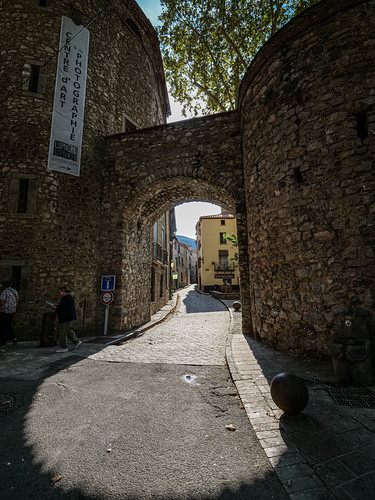
Sunday photoblogging: Pézenas, Porte Faugères

by Chris Bertram on March 22, 2026

Porte Faugères

{ 3 comments }

Habermas, democratic discourse, and class

by Lisa Herzog on March 18, 2026

Jürgen Habermas has died, at the age of 96, and traditional and social media are full of obituaries and memories. For outsiders, it is maybe hard to gauge the omnipresence of his name in West Germany,* but his influence on democratic theory more broadly speaking is well-known. When I entered university, people would mention it in the same in way in which Kant or Hegel were mentioned (full disclosure: I saw him a few times in person, but with no chance to have a conversation beyond small talk). I remember – as a young philosophy student, a clueless outsider of the system of academic philosophy – perceiving a kind of tension between what his texts said, namely that only the “forceless force of the better argument” should prevail, and the kind of cult status that many younger people ascribed to him.

[click to continue…]

{ 93 comments }

Sunday photoblogging: shed

by Chris Bertram on March 15, 2026

Shed

{ 1 comment }

Third and last part of an article discussing Imperia, the large concrete statue of a semi-fictional medieval sex worker.  Part 1 is here and Part 2 is here.

A Clandestine Erection

Imperia went up in April 1993, and I won’t even try to explain the insane backstory. 

Short version: some people in Constance wanted a cool statue to add luster to the waterfront.  Most of them were thinking of something like a Statue of Liberty.  A minority, however, had a more subversive idea.  And those guys picked Peter Lenk, a sculptor with a reputation.  But when the City Council of this fairly conservative small German city saw the plans… you can probably guess how that went over.  There was, let us say, some pushback.

But Lenk and his allies went ahead and put up Imperia anyway.  The statue was prefabricated and shipped to the harbor in pieces.  Most of the construction happened in a single night, between midnight and dawn. 

So Constance woke up to Imperia, and… honestly, it wasn’t love at first sight.  “Bemusement” was one common reaction.  “Disgust” and “outrage” were up there too.  

Part of it was, of course, that she’s a gigantic sex worker.  Another part is that she was satirizing something that happened almost six hundred years previous, which even in Germany is not exactly front page news.  And of course, there were her let’s say attributes,

Imperia (2026) - All You MUST Know Before You Go (with Reviews)
[there are a lot of photos of her from this angle for some reason]

plus the fact that she was holding a naked Pope in one hand.  Constance is a pretty Catholic town, and the whole “naked Pope” thing didn’t really go over well.

[click to continue…]

{ 14 comments }

Fifteen years after Fukushima

by John Q on March 12, 2026

It’s the 15th anniversary of the Fukushima nuclear disaster, and any lessons from that event seem to have been forgotten by most. Political leaders of all stripes, from centre-left to far right have been keen to promote nuclear power as at least a partial solution to the problem of replacing coal and gas. The peak of enthusiasm was reached at COP 28 when Joe Biden, Emmanuel Macron and Rishi Sunak signed a pledge to triple nuclear power generation by 2050.

[click to continue…]

{ 46 comments }

I have to admit that I am not at all sure of the date of International Women’s Day. It seemed to be every day of the past week or so. Which perhaps ought to be the case every damn week.

So it seems timely to tell you about the current issue (Volume 35) of Women’s History Review, edited by me and Claire EF Wright, who based at the University of Technology SydneyClaire was recently listed as Australia’s leading economic historian – which is especially impressive because she might also be the youngest (not to mention one of the most female). This was about citations. Just in case your mind leapt to the anti-DEI propaganda flooding the world right now.

We called the issue ‘Cheap Labour’, which describes on one level the price of women’s work, producing the gender pay gap (relatedly, I learned at work this week that even in fields where almost all workers are still women, there is still a gender pay gap in favour of men).

But we were not just wanting to repeat the well-known inequitable pay system. We wanted to use this special issue to think about women’s place in the history of capitalism. ‘Cheap labour’ refers to the kind of cheapness described by Raj Patel and Jason W Moore in A History of the World in Seven Cheap Things. They show that way that surges in profitability have been driven by exploiting something that is (usually but not always temporarily) crazy cheap. For the capitalist, anyway: the cost of fossil fuels, time caring for family and stolen land is borne by someone – and, ultimately, everyone.

[click to continue…]

Sunday photoblogging: VW reflection

by Chris Bertram on March 8, 2026

Hebron Road reflection

{ 2 comments }

Every child should be wanted

by John Q on March 8, 2026

It’s a truism that every child should be wanted. While there are plenty of exceptions, the birth of an unwanted child often turns out badly for both mother and child (and father, if they are present). Sometimes, once a child is born, the fact that they were initially unwanted fades into irrelevance, and the bond between parents and child is as strong as with a planned birth. But this isn’t true on average: children born after their mother was denied an abortion (due to time limits) experience, on average, more poverty and poorer maternal bonding The extreme case is that of Ceausescu’s Romania, where abortions were banned, and the resuling unwanted children received miserable upbringings in orphanages.

The birth of an unwanted child can be an economic as well as a personal catastrophe. This is crucial to understand when we are assessing claims that “the economy” would benefit if families had more children than they currently choose.

Raising a child from birth to adulthood requires huge inputs of labour, time and money. In the context of a loving family, these parental inputs are more than offset by the joy of having children. Because this context is assumed, most estimates of the costs of raising children typically focus on the financial costs incurred by their parents. That’s been estimated at 13 per cent of a family’s disposable income on the first child and a further ten percentage points for each child after that. For median couples, that amounts to about $300,000 over 18 years for the first child. Subsequent children would be about $230,000 each.

[click to continue…]

{ 41 comments }

Golden (missed) opportunities

by Hannah Forsyth on March 3, 2026

She told me she’d be ten minutes late, which was fine. But when it was nearly twenty minutes I messaged – where are you? Shall I walk towards you?

My daughter sent a picture of a bit of the state library she was in, people at desks etc. We’re here, is this where you are?

I am outside, I said. But I walked inside anyway. I compared the picture to what I saw. It kinda looked the same. But the floor in the picture was parquetry. Mine wasn’t. I started to wander to find the right room, calling my daughter on the phone as I did so.

Where are you?

Near the cafe. I walked to the cafe. No daughter there.

More descriptions followed. And then something clicked.

Wait, I said. Are you in MELBOURNE?

Hang on, she replied. Are you in SYDNEY?

[click to continue…]

{ 6 comments }

About thirty years ago, a Stanford educated philosopher, Paul Humphreys (1950-2022), realized that when connectionist models started to be developed within AI, that a set of questions and debates about Monte Carlo simulations might be salient.* In particular, the fact that connectionist networks might be very complex, inscrutable matrices need not be an objection to their epistemic usefulness. This inscrutability of AI is known as ‘the Black Box problem’ in recent scholarship. After all, some Monte Carlo simulations were in practice also inscrutable, but this didn’t prevent physicists from using them. (There is a nice, accessible discussion by Eric Winsberg of the significance of Humphreys’ work in the philosophy of simulation here.)

In the course of his many papers on related topics, Humphreys coined a term, ‘epistemic opacity’ or Humphreys opacity, that characterizes one of the key aspects of such inscrutability.  (See also here; or here). Such epistemic opacity — and now I paraphrase Humphreys — involves the inability to surveil the steps of a process from a known input to a known and desirable (or truthful, useful, beautiful, etc.) output in a timely manner to the decision-maker or responsible agent. I put it like that to make clear that this ignorance is pragmatic in character and could be modelled in terms of trade-offs between the quality or benefit of the output and the cost of surveillance. (Of course, it’s possible the opacity is not pragmatic, but ontological in character.) In addition, I use the ambiguous language of ‘surveillance’ because the process can be computational, social, or natural in character.

I make no claim that epistemic opacity is unique to AI. Often human minds are opaque to each other in this very sense. And in other cases such opacity is characteristic of our self-knowledge. Even if one wishes to keep one’s distance from Freud and his school, it is uncontroversial that there are lots of brain processes that are inaccessible to ourselves even though we can track the input and output to them.

In fact, epistemic opacity in Humphreys’ sense has been long recognized in the study of natural, psychological, and social processes. For example, for a very long time ‘sympathy’ was the term used to describe (a/the) cosmic and psychological mechanism(s) in which the process was invisible, even though the start and end of the process were visible. My interest below is not in this particular example, but I will suggest that the history of social awareness of the significance of epistemically opaque mechanisms may illuminate our discussion of the unfolding impact of AI.

[click to continue…]

{ 35 comments }

Sunday photoblogging: car reflection

by Chris Bertram on March 1, 2026

Car reflection

{ 2 comments }

Imperia: A European Culture Story, Part 2

by Doug Muir on February 24, 2026

Some Americans have been talking about our shared European culture lately!  As CT’s resident American-in-Europe, I feel I must respond.  So, here’s a European culture story.  (This is Part 2,  You can find Part 1 here.)

Okay, so Imperia!  Big concrete statue on the shore of Lake Constance.  Medieval sex worker.  9 meters tall, weighs 18 tons, rotates once every four minutes.  Here she is again:

Imperia (Statue) – Wikipedia

Let’s look at some details.

[click to continue…]

{ 11 comments }